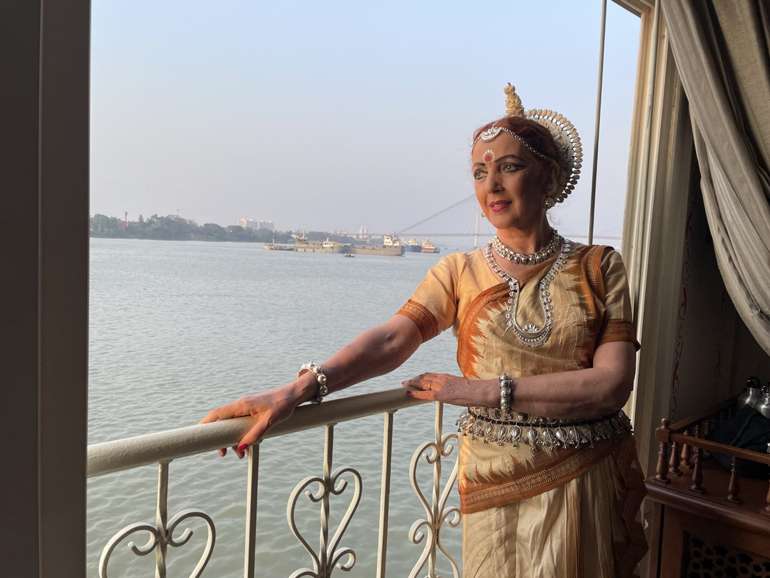
I reached Cuttack on 1st June 1979 by train from Delhi. I remember going directly from the station to my Guruji Kelucharan Mohapatra’s house by cycle rickshaw. My first accommodation was in a working women’s hostel. It was empty because of the summer vacation. It was hot and humid, the beginning of the monsoon, and I think I survived for an entire month by drinking only butter milk and peja, the water in which rice has been boiled. In those years, filtered or ‘Bisleri’ water was still not available in India and that kind of liquid diet must have been quite risky for an ‘untrained’ intestine like mine.
But I survived!
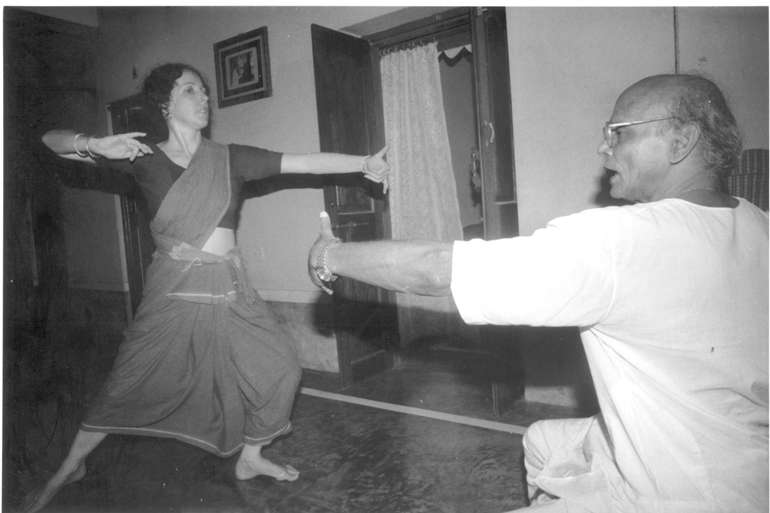
When after a few months, I found an accommodation as a paying guest with a Bengali family – which eventually lasted for the entire period of my stay in Cuttack for nine years, before I moved to Bhubaneshwar – my lunches and dinners were provided by the house host, an elderly and gentle lady who used to cook in the Bengali style (I never went to the kitchen to see how the food was prepared. So, I did not learn anything; I was just happy to eat whatever was served to me).
I used to be vegetarian then, and when she cooked fish – which was at least four times a week – there was very little left for me to eat! That was the reason why after a few years I decided to turn non-vegetarian again. In the West becoming vegetarian was part of a protest movement directed against values and beliefs identifiable with the bourgeoise society whereas for me here in India it would have meant only to remain under-nourished. The breakfast was left entirely to my own making and it remained the same for nine years: chuda (flattened rice), dahi (curd) and kadali (banana), mashed into a paste-like thing. This changed into dalia porridge and milk after shifting to Bhubaneswar.
When it was decided by my host that she would provide only lunch, my dinner became ‘spaghetti’ with tomato sauce, made from fresh tomatoes, that I cooked on a small electric heater. My accommodation comprised a single room which functioned as kitchen, bedroom and studio all in one. Spaghetti was not available in Cuttack in those years and had to be sent by mail from Italy by my mother. Once she put in the same parcel a small packet of cacao powder, and it so happened that probably at the time of the custom checking the cacao spilled into the spaghetti. I received two packets of ‘spaghetti al cioccolato’ which I had to eat because they were too precious to be thrown away.
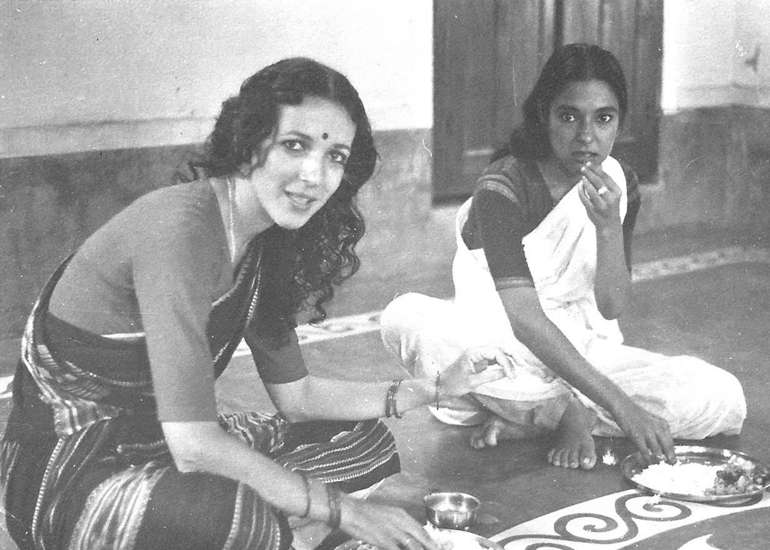
My real weakness during those days was milk; I could have survived only by drinking milk. It seems as if everybody in Cuttack knew about it because I remember how in every house I went there would always be a large glass of milk waiting for me. I was probably the only ‘foreigner’ roaming around in Cuttack during those early days – and that also by moped – and was almost a matter of ‘pride’ for many houses to have me as an impromptu guest any time of the day without any particular reason or occasion. I really don’t know in how many houses I enjoyed a glass of milk in Cuttack during my stay; I would really like to be able to remember all and each of them.
Since my early days in Cuttack in the 80s, I remember wondering about the constant sight of vehicles – bicycles, motorbikes, buses – running on the roadside carrying clusters of orange-colored sacks hanging on their sides. The buses were the ones with the maximum number of those bags but motorbike drivers were also able to balance the bags quite well straddled in between their legs. I gradually came to discover that this was actually a quite ingenious way to strain freshly prepared cottage cheese of the whey, a remainder after the curdling of the milk. This was to make sure that the consistency of the cheese was the right one for preparing the sweet dish called chhena poda. The sacks were made of the same material as the gamcha or coarse cotton cloth which are constant companions for the inhabitants of a hot and humid land like Odisha.
I have to confess that I was not sure at that stage about the perfect hygienic condition of the system considering the long journeys, the dust, the not-so-assuring aspect of the containers but after some time I began to be more relaxed about the matter, especially when I started to taste the final product. The sort of cake made out of the cheese transported in that peculiar fashion turned out to be one of my favorite dishes quite soon. It could be relished at any time of the day – as a sweet dish, as an afternoon snack, along with chapati in the evening meal, or after a lunch of rice and vegetables.
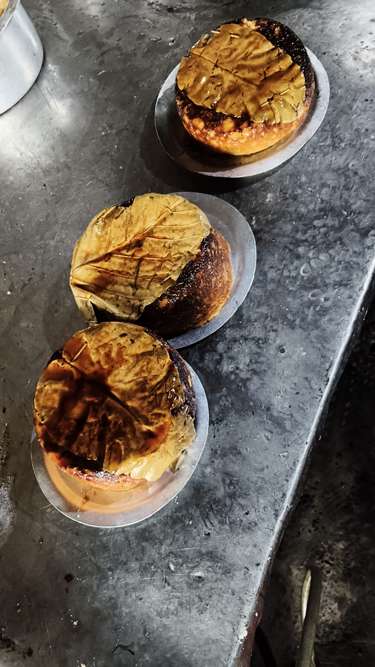
My students know very well that whenever they want to make a celebration or want to gift me with something to eat, all they have to buy for me is a freshly-made chhena poda cake. They may buy for themselves samosa, alu chop, bara, dahi vada or a mixture of any type, but for me none of these popular items will work, nothing except chhena poda.
I am not much of a cook myself, so I have to admit that I have never tried to make it so far. But recently I was a guest in the house of an Odia family in New Jersey and the lady of the house told me that she was going to make a huge chhena poda to distribute to the guests during the function which was planned for the next day. I was intrigued by the fact that she could make it at home and for so many people and in such a short time.
Until then I thought that it could only be prepared on the traditional chulha, since the brownish color of the outer surface of the cake suggests a type of burning produced by a natural cooking over fire. I had once heard the story of the origin of this peculiar dish during a seminar on Odia cuisine. The story goes that one day, sometime in the middle of the last century, a certain Sudarshan Sahu, a sweet maker of Dashapalla village in Nayagarh district, not knowing what to do with the left-over cottage cheese at the end of the day added to it some sugar and left it on the stove which was still warm from the day’s work. To his surprise in the morning, he found out that the cheese had been covered by a baked caramelized crust while the inside part had remained soft and spongy. He found out that the mixture had an excellent taste. From then onwards, he refined the preparation making it into what came to be known as chhena poda or burnt cheese cake, the ultimate Odisha sweet dish.
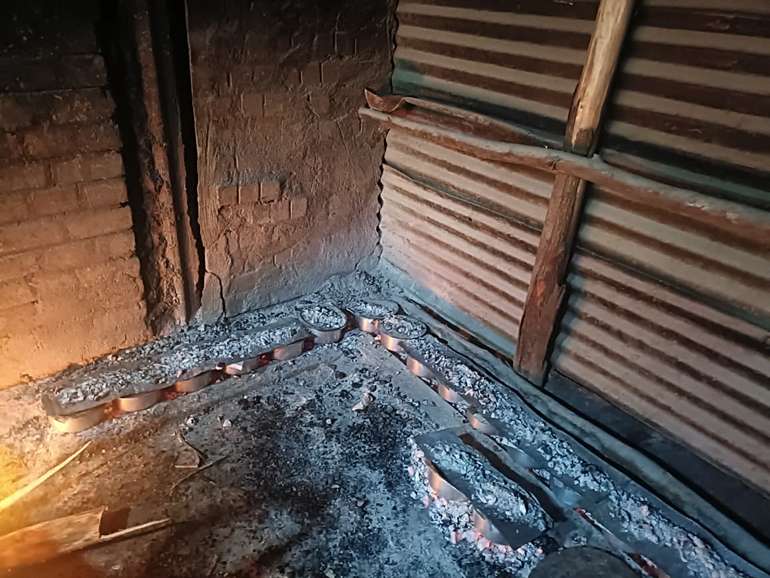
Coming back to the lady in New Jersey, I became quite curious to know how she could make it in a modern kitchen so far away from Odisha. The cheese was freshly made out of boiling milk by squeezing lemon juice into it until the chhena separated from the whey. After straining it (I remembered the hanging cloth bags of the running vehicles), she started kneading it quite energetically with her hands while mixing it with sugar and few spoons of semolina. The quantity of sugar to be added is quite determinant; at times I find the ones sold in the shops too sweet. She added some cardamom powder and rose petals and made the entire mixture into a well-knit ball.
After smearing it with ghee, she placed two or three layers of banana leaves on the bottom (she told me that in Odisha she would have used leaves of the Sal tree but in the Asian food stores in America, those were not available). I finally understood why on the surface of the chhena poda one could notice some imprinted marks usually darker than the rest of the surface as if leaves had been stamped on it. The mixture was then placed in the vessel by applying a certain pressure on it so that it would fill up evenly. It was then covered with another layer of banana leaves. The delicate part was to regulate the temperature and time of cooking. But my friend seemed to be quite an expert. She regulated the oven at a temperature of 350 F for the first 45 mins and then increased it to 375 F for the last 15 mins. I wonder how one can be so precise in the case of an indigenous chulha where the heat has to be measured by other factors such as smoke, smell and continuity of the burning flame. The cake was then left to cool down and removed from the vessel by overturning it so that the ‘burned ’part became the upper part. It was still covered by the dried leaves, their stamp on its skin. As opposed to other types of cakes, this one does not have a particular fragrance, the type which pervades the kitchen when a baked cake is made. On the contrary, this is a ‘burned cake’, exactly what other cakes should not be! In spite of this, it has an almost ‘divine’ taste. The State has even decided to celebrate the 11th of April, the birthday of Sudarshan Sahu as chhena poda dibasa.
I now celebrate my birthdays with a huge chhena poda cake (without candles on it!). I cut it into small square-shaped portions instead of the usual triangular slices of the western cake. No, I don’t make it myself. I order it from a shop in Old Town in Bhubaneshwar, but, who knows, after writing this essay, I may one day even try to make it myself.