
Artworks – Vijaya Kumar Seethappa
Once upon a time, a little girl lived in Anini. Let’s call her J. She stopped eating food for days. No amount of coaxing by her mother helped. All she asked for was aloo pitika. Mashed potato.
During those days, she dreamt about boiled potatoes taken straight out of the pressure cooker, which whooshed with loud whistles, at least twice.
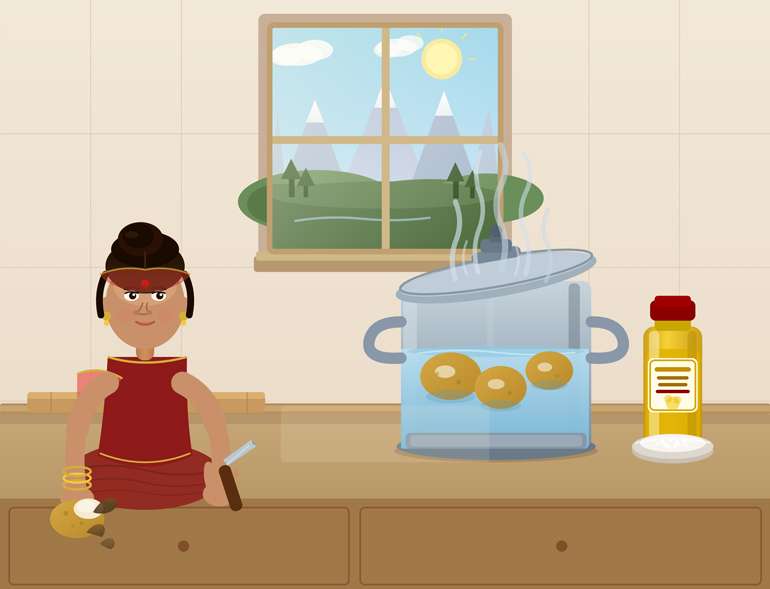
Her mother peeled off the flimsy potato skins, exhaling hot air. The black spots on the skins made those oblong potatoes look like some animals.
The starchy texture left a burning sensation on her mother’s fingers. She constantly dipped her hands into a saucepan filled with cold water. Once the off-white potatoes crumbled, her mother smashed them with her right fist like a hammer.
Bang, bang, bang…
The exercise was to guarantee that if ever there was a hard and stubborn potato nugget, it surrendered its ambiguity and became one with everything.
It’s time for some dressing. A pinch of salt and a spoonful of mustard oil were added to the paste. But no place for onion and chilli. The former was heady and crunchy but notorious for making one’s mouth fetid, and the latter punched hard and brought tears.
Once everything was blended, the potato paste was assembled to mimic its original form. A giant potato.
Her mother did some mental calculation and scooped out three equal parts from the giant ball. The room smelled raw, like hunger.
The aloo pitika portions were served on three stainless steel plates alongside bhaat coated in butter for J and her siblings. A, M and J, the three sisters, were born one after another and ate their food at a wooden table. Its legs quivered as they pushed their chairs closer to it.
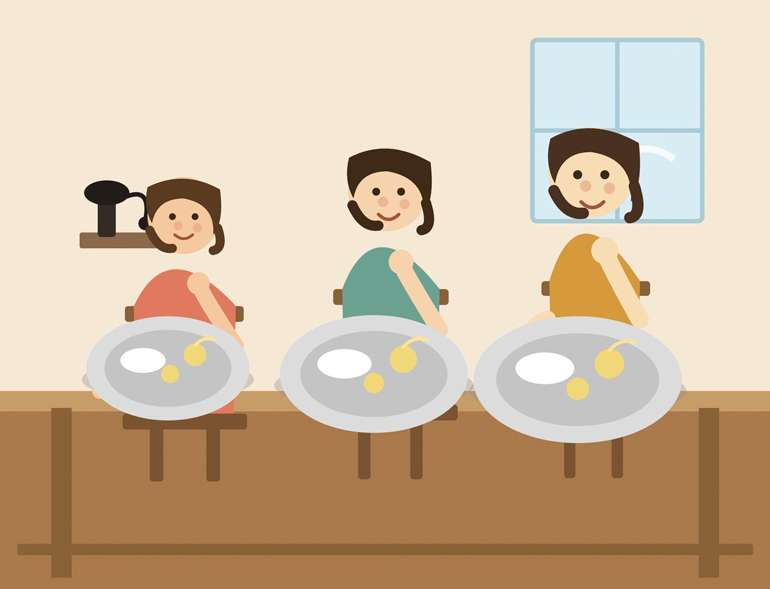
J was the quietest among the three. She pressed her index finger into the mashed potatoes, creating a depression in the centre before taking the first bite.
Nobody ever asked J the reason behind her devotion to aloo pitika. Neither did she intend to explain to anyone what she saw between the finger-pressed gap of aloo pitika.
Sometimes boiled eggs accompanied the meal whenever the domesticated chickens laid them.
Other mothers cooked pooris, parathas or sweet semolina bathed in sugar and oil for their children. A, M and J ate the same bhaat and aloo pitika every day before they left for school. In repetition, they found reassurance. Food was good, and so was life.
Anini was so remote that its residents never had the luxury of eating bread or dosas for breakfast. The Himalayan town did not have a grocery shop or eatery. All it had was a cooperative society store. Its wooden racks stored rice, pulses, dalda, flour, peanuts, biscuits and papads. The store was home to countless rats. Some were as big as cats. They were super active during the nights after the salesperson locked the retail outlet. An ammonia-like smell never left the store.
During Durga Puja and Bihu, the store hung kids’ clothes from its ceiling. Most garments remained unsold and were not removed from display until they lost their sheen and were coated in dust. Those who wanted to eat bread, jam or noodles bought them from neighbouring Dibrugarh and Roing. Unlike Anini, Dibrugarh and Roing were fairly developed. These towns had well-laid roads. There were shops of all kinds. There were cinema halls, car showrooms and private schools.
When times were hard, Anini dwellers longed to shift to Dibrugarh or Roing. They wanted to escape their isolation induced by the snow-laden mountain cliffs surrounding them. It was aspirational, like those from small towns dreamt of moving to Delhi or Mumbai. From these cosmopolitan cities, people flew to foreign shores. Anini remained constant like A, M and J’s breakfast.
The helicopter was Anini’s window to the outer world. Its arrival depended on the weather. Often, it rained in Anini. When it did not, the clouds shrouded Anini, which hardly had 1,000 inhabitants, in a blanket.
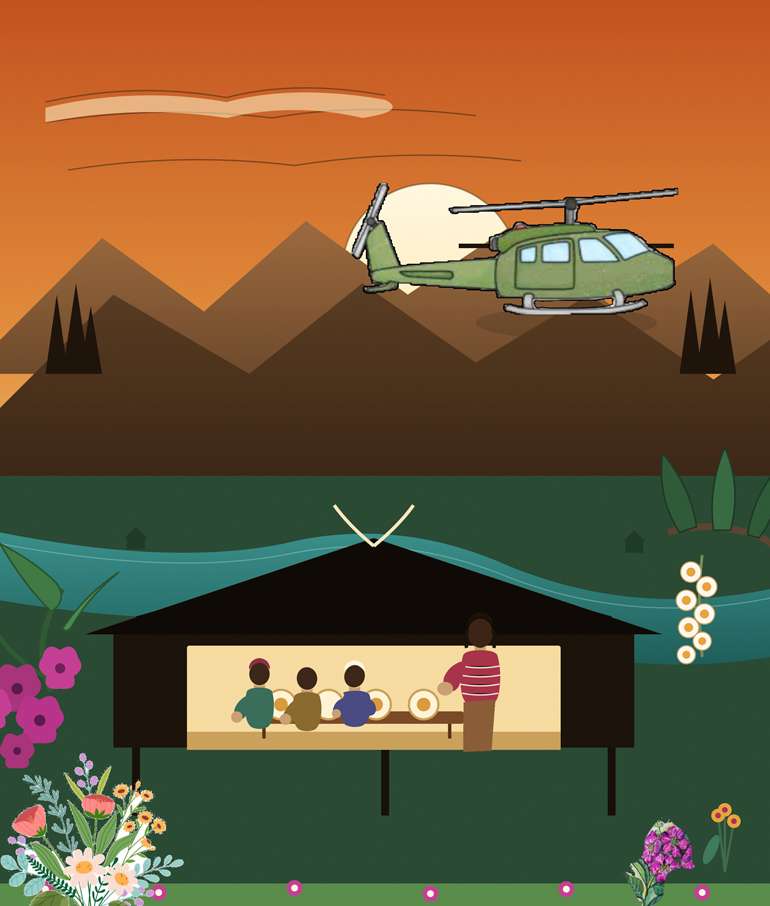
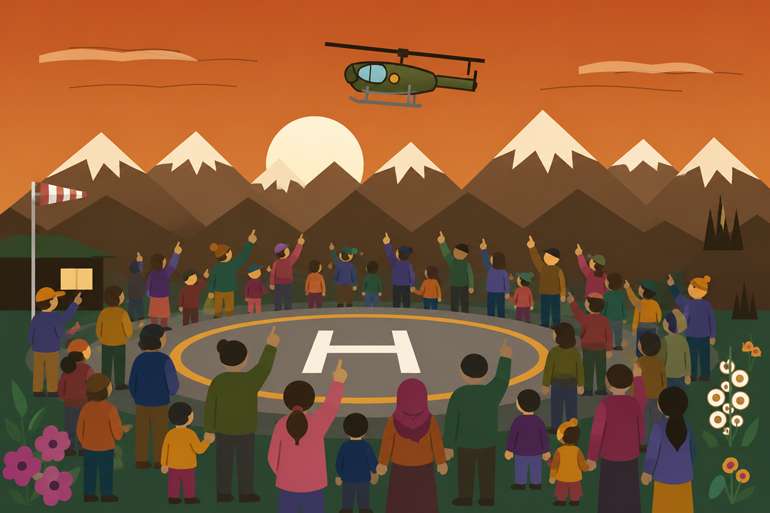
The advent of the helicopter was always a celebration. But those were rare days. The residents came out of their homes as the thick noise filled the air all over Anini. It was a whirlpool that sucked all at once, and the helicopter blades kept displacing the burden of a long wait.
Then one by one, women, children, labourers and office-goers headed towards the helipad, leaving aside their work midway. From the helipad, atop a small hillock, it looked like a scene directly from The Pied Piper of Hamelin. The helicopter ferried people, food, clothes, books, and almost everything one wished for. Sometimes, love and memories.
One winter season, the helicopter missed its date with Anini for weeks. All the food stock started depleting. The kitchen gardens turned bare and forlorn. The dry corn plants with wrinkly, dead leaves stood mourning. They cried hoarsely as icy winds swept across their veins. The frosted streets, fields and rooftops hissed anger and desperation. The mountains stood stoic like sages in meditation, joining the residents in their prayers for the early arrival of the helicopter.
Every household grew potatoes, pumpkins, squash, corn and lai patta. J’s mother was enterprising and grew peanuts, too. But nothing survived the dreaded winter. Even chickens, ducks, goats and the pet dog, Wintry, part of J’s “animal farm”, hibernated. The fish pond dug at the corner of J’s house turned muddy before all the fish died that winter.
Potatoes were the first to disappear from kitchens as tuberous stems were used in almost all preparations. Occasionally, local Mishmi women descended the treacherous mountain tracks to reach Anini. They kept the potato supply intact for a while. The old women carried bamboo baskets on their heads, laden with vegetables they had grown in their villages. They went from house to house in Anini, and bartered their produce for rice, sugar and tea leaves.
J’s mother became judicious with potatoes. She had a premonition. J’s father was away from home on an official tour for weeks. J had two Ps in her mind, papa and potato.
During the lean days, her mother cooked one potato a day. It was for J’s aloo pitika. Her mother stopped adding mandatory potato cubes to chicken curry and ghugni. The food tasted unforgiving.
J went on a hunger strike after the potato stock ran out. It was a silent protest. She remained without food for two days. Her mother’s worries froze in time. She asked her neighbours if they had any potatoes left. The answer was always a “No.”
On the third day of the hunger strike, Chakraborty Sir, who taught J English and Mathematics, visited her home with a cloth bag hanging from his right shoulder. He walked several kilometres to buy potatoes from a village.
J’s mother boiled potatoes for lunch. The girls ate aloo pitika with rice and dal. J looked at her mother with a smile. Her mother looked through the window. It was sunny outside, and she tried to catch the approaching sound of the helicopter.

Lovely story. A peep into another way of life and a child’s simple need for reassurance and stability in the form of a very simple dish.