
Translated by V. Ramaswamy
The tales of how people go through their lives are really diverse. We talk about fairy tales – but these are no less than that!
To all appearances, it seems that a monotony finds life within our ongoing civilisation. However, those who are in the business of people’s history know how amazing folkways are. They are full of turns and variations. And things like homes, umbrellas, and shirts, right down to entire kitchens, burst headlong into this tale of changes. Going beyond the familiar pots, ladles and spatulas, they provide refuge to human migrations. It won’t do to dismiss all this as mere household gossip. With a bit of explanation, one can reveal how hundreds of political commentaries spring to life from them.
Those who work on human migration are in a constant search for a kind of cultural journey that transcends history and geography. The nature of the journey varies according to country and time. And so many foodways have come to life through those journeys. Looking at it from afar today, one could mistake them for fairy tales for sure.
Even today, pithe is prepared in every Bengali household on the occasion of Sankranti. Does that pithe bring back memories of the sacrificial offerings of the Aryans? No, they don’t. The appearance of the offering has changed so much that it is no longer recognisable amid the din of the ongoing civilisation.
The Ain-i-Akbari was written towards the end of the sixteenth century. This text referred to cooking, and there were cooking instructions as well. But the book was written in northern India. We will notice that there is no mention of chillies in the text. Although chillies had reached southern India by then. But why only chillies – there are so many stories of spices intertwined with human journeys. Bloodshed and conflict were inevitable along the way. Looking back at history, we can see that this ongoing journey of humanity continues even today.
Human migration on earth is an ancient and yet ever-novel phenomenon. In the course of that continuing conundrum through lands and times, it has cast its shadow on the homesteads of Bengal as well. And that shadow has moved with the help of people. It has spread through the Andamans, through Tripura, and then through the alleys of Punjab, all in pursuit of survival. Not only has it actually spread, it is still spreading. Who wouldn’t want to probe into this history of mobility! These stories of households, stories of oil, salt and fuel, can become as thrilling as the Bengali quarter of Brick Lane, in London.
A strong desire to explore the anthropology of food and cuisine in our own way had grown within us (me and my husband, Amit Sen). It was this inner urge that drove us from the villages around Agartala to the bamboo plantations of the Middle Andaman. The alleyways of the city of Rangoon, and the Kali Temple and fish market there were all like a moving art gallery. The human lives – that could belong in a novel – and their everyday kitchens were amazing. Come, let us dive into that tale.
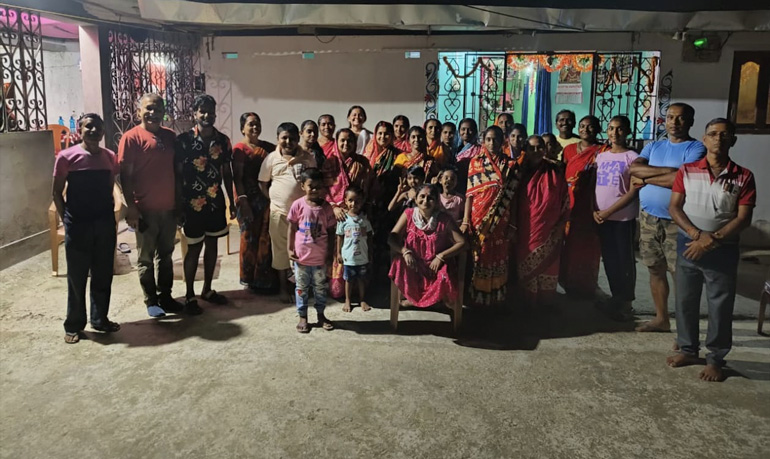
What we know as Bengal today, wasn’t always like this. The story of a people is not written on a map. That has to be looked for in the forest of humanity. But the forest is scattered! So how does one look for that? Is it easy to find it? Immersed in such questions, we wanted to explore an anthropological interpretation of the food and cuisine of immigrant Bengalis. You could call it a personal idea. In fact, the quest for a once-created larger community gradually turned my life, or I should say, our life, into a nomadic one.
Which Bengali exactly were we looking for? The Bengali who had left his native soil, who had been compelled to leave. Whose current geographical location had brought about a kind of change in every sense. And of course, whose kitchen too had changed a bit since the migration. Our search revolved around what could be called diasporic Bengali food. It was in that connection that we travelled to various places. The continuous search makes us take up journeys at every moment. One may call it a story by mistake. But it is true, it is real. Let us get a little glimpse of the story for now.
It is only natural that the subject of partition would come up here. Sealdah station was then full of crowds of homeless folk. That image is familiar to us. It was only after the homeless folk made their way through the crowd and registered themselves with the government that they could become “refugees”! Again, the refugees would be divided into various groups. Each group would reach a different camp. And from there to some refugee colony. Dipanjan Roychoudhury, in the first and second volumes of his Probas Jiboner Kotha (Stories of Life in Exile), has written with great care about the days of the establishment of the colonies in Bijoygarh and Azadgarh. Life in this new colony was actually a life in exile. Those who have read the writing of Bijan Bhattacharya would know what the people of a waterborne land had thought – that one now had to stand in a queue to collect water from a tap! The rice from the ration shop had a musty smell. Someone had commented that this was rice from the time of the Second World War, which had been stored in a warehouse. Stories came to life through word of mouth. And they seemed to dwell in a magical reality. The collection of tales from the refugee colonies could well remind one of Marquez’s One Hundred Years of Solitude.
Nonetheless, the stories of Jadavpur and Layelkar Math are similar, but what about those who spent a few days in the camp and then boarded a ship! Those who would cross kalapani, the proverbial “black waters,” venturing across which was forbidden! Their stories are different. Under this refugee resettlement project, those who were sent to a remote island of the Andamans were principally Namasudra folk from south Bengal. They were peasants and fishermen. The shape of the hands and feet of these Namasudra folk were examined. Actually, it was being ascertained whether they would be able to survive at all on the remote island. The people crossed the saltwater sea and reached the Uniform Warehouse (in Port Blair). And from Port Blair, they scattered here and there once again. Some went to Kadamtala, and some to Diglipur. The ancients in Kadamtala spoke about those days. Those who went to Diglipur also did. After all, does anyone ever forget those memories!
After disembarking from the ship, each household got a hut with a roof made of leaves. Hot rice and a venison curry were cooked. After all, where would one get goat or chicken meat in these islands! There were wild mangoes and bananas from the forest, and so many other fruits. There was a plant which resembled the jute plant a bit. The mother of a person known as “Gayen sir” used to cook its leaves. The people from Ranchi (those who came from present-day Jharkhand), who had arrived some time before the refugees, had named it bakri pata, or goat leaf. People used to catch lyata and koi fish from the muddy slime. The tips of cane plants were cooked. The government provided seeds, but not ploughs and bullocks. It was virgin land from time immemorial. There were mounds of leaves and mulch. The people had merely broadcast handfuls of paddy seeds. It was primitive agriculture. People from Barisal, as well as those from all over south Bengal, who had grown up eating hilsa fish never ate hilsa like the one from their homeland again. Hilsa from the sea was extremely tasteless.
Nonetheless, there was fish, there was taro. After the payment of dole stopped, these comprised the survival capital of the resettled folk. But was it only those Bengali refugees who were spread across those islands and geographies? The import and export of people was prevalent in 1922-23, in British India. The indigenous Karen people of Burma were shown advertisements of resettlement, using the pretext of the civil war, and brought there. Their settlement came up near Mayabandar, it was a village surrounded by the canopies of gorjon trees. Didn’t they have conflicts with the Jarawas! They did. That had to happen. And people from Ranchi arrived too. The indigenous Karen folk and the people from Ranchi were adept at clearing the forest. After all, labouring folk too were required to clear the forests and build leaf shelters for the refugees. Meanwhile, there were also the convicts of the Cellular Jail. Taking all this together, public life and cuisine in the Andamans wove a story with a different flavour through the days and nights.
It would be unfair to look for any fusion in the cuisine of the people from Barisal, who were never able to return to the homeland they left behind, let alone go beyond the Andamans. Rather, they could tell you how to cook completely unknown and unfamiliar items (like zindabali and giripuspa). Can the flowers of the flowering plant that they fence their courtyards with, the juice of whose leaf they apply to the wound in case of a scorpion bite, be used for tempura? The people experimented with all that. Those too were like lessons from a primitive school. Through learning those lessons, the smell of sour curdled fish wafts today from Bengali kitchens, touching the Tamil fishermen’s settlement in the Andamans. Kitchens thus continue to bear witness to life on the move.
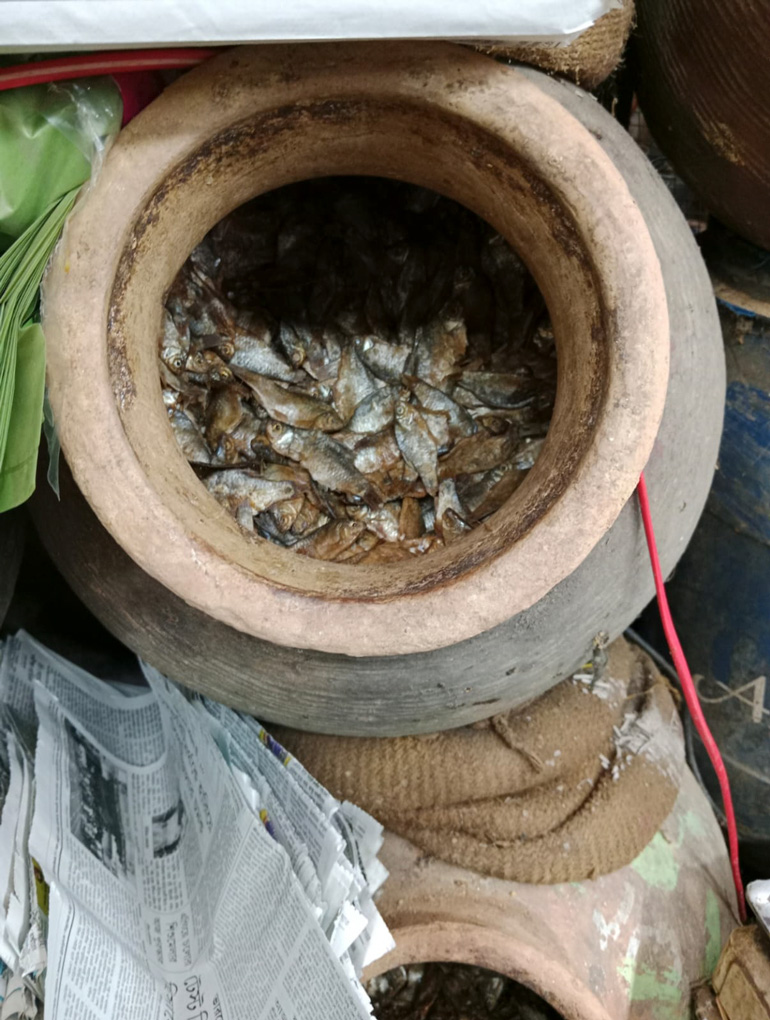
That is what life in the Andamans was like. But that was not what happened in Tripura. After all, it can’t be a duplicate copy! Those who came to Tripura were mostly people from Cumilla and Brahmanberia. They belonged to the trading community. They were able to buy land. Although living beside the Tripuris, the indigenous people of Tripura, they were successful in becoming so influential that eventually a Bengali government came into being. Even after this political equation, the cuisine of the Tripuri folk was becoming a part of the kitchens of Bengalis in Agartala everyday. Choumuhoni Bazar was suffused with the smell of shidol, or fermented fish. Godok (a traditional dish made with rice, bamboo shoots, banana flower etc) was cooked in every Bengali household. You might wonder how the fragrances from the elevated houses on stilts of the community of jhum, or slash-and-burn, cultivators spread their roots on the walls of the Bengali settlement! That was most amazing. The kitchen kept unrolling the spool of the thread of these stories, night and day.
When even godok was cooked with fermented small freshwater fish in Tripuri households, was it at all possible to think of any vegetarian cuisine? In the context of the notion that cuisine was meaningless if it lacked fermented small freshwater fish, an aunty from Cumilla discovered its vegetarian version. And thus cuisines change – they either gain life, or get lost. It may seem like these things are made up. But for a bit of real visual spectacle, one could go to the Burma Colony, in Barasat. Mohinga (a fish soup prepared with rice noodles, typically served as a hearty breakfast) is sold on handcarts there everyday. Or you could go one day to the Burma Colony in Subhashgram too. There are houses on all the plots of land that were distributed to refugees from Burma for resettlement. The cupboards of those houses bear the imprint of a time when they lived in Burma. An owl made of lacquer, bowls of china to eat ohn no khao swe (Burmese noodle soup), and so much more! Memories still linger in all those hamlets, and people are still immersed in memories of childhoods spent in Rangoon.
But what about those who remained, and held on firmly to the city of Rangoon? Who did not return despite assurances of resettlement? The mistresses of their kitchens bargained hard and purchased hilsa from the Irrawaddy. The juice of ginger and fish sauce were added to the hilsa to prepare nathalong pong, or atho, with peanut flour. As the fragrance of lemon grass spread, the scent of Bengali life steadily vanished. Perhaps in the course of eating rice with a tea leaf salad, the Bengali clerk discovered the kitchen anew.
And it wasn’t just in Rangoon. Going beyond even this change and fusion of Bengali and Burmese cuisine from Taunggyi to Mandalay, the coexistence of Tamil, Bihari or Rajasthani flavors must be understood keeping in mind the old map of British India. It is pointless to explain the history of food to a Burmese boy who eats a singhara with green chillies, together with hot rice kneaded with ground pepper, for breakfast. The greatest quality of migration is that it can so beautifully blend human tastes with other tastes that hunger eventually seems to be the only face of humanity. Only such hunger could have taken a famished Bengali mother, freshly arrived from Shahzadpur (in present-day Bangladesh), to faraway Amritsar. After all, the news had spread, by word of mouth, on this and that side of the barbed wire fences, that food was available there. There may not be any rice, but rotis were available in the langars, with dal, and halwa. That was not just food, it was the blessed food of God. In this city (Amritsar), people did not die of starvation. Thinking along such lines, a procession of humans arrived here. They did not know the language, they did not know the streets, and yet people rented a shanty and spent their lives there. They found the atap rice tasteless. Where would they get their own boiled rice! It might seem a small luxury. But after all, it’s human emotion, a human tongue. Which only wanted to return to familiar flavours. They wanted to return to fish and rice. But you can’t get that by merely wanting it. Fish vendors began to ply their trade in the Bengali colony, but of late that marketplace is a bit different. The body of the shol fish is sold off to hotels. And in the Bengali colony, the heads of shol fish sell like hot cakes.
Those who want to discover some regional identities on the margins of the domestic market – would do well to visit such marketplaces. Which is why dishes like paturi of shol fish heads and gravies of mint leaf fill the kitchens. When apples from Himachal Pradesh are very cheap – such fruits are sold at very low prices on the streets of Amritsar. The hands of Bengali women then prepare a ripe apple chutney, to the clinking of their traditional conch-shell and coral bangles. Not exactly a chutney, but a sour preparation with tamarind. Like what they used to eat in summer back in the homeland! Together with vegetables, and fish.
One would be amazed to observe the joy of life, the urge to survive, and the pictures of the kitchens of those who are familiar to us as kabariwalas, or scrap buyers, in the city. Someone had come from East Bengal, someone from Nabadwip, while someone had come leaving his village in Hooghly district – in this syncretic melody, I am sure you will find the “polyphony” that Bakhtin pointed out, even amid the roar of Ram Navami. There is no specific source, but one has heard that at the request of the Maharaja of Patiala, in British India, about a hundred Bengali households were taken to Amritsar to keep the city clean. They could be called kabariwalas in today’s terminology. That community of a hundred years ago has broken up. But a map of Bengali migration to the city of Amritsar has been created around the kabariwalas colony. The search for a national identity has been born within them, covering everything from labor to education to health. These Bengalis had in a way mastered their food habits and gradually Punjabi food became integrated with their lifestyle.
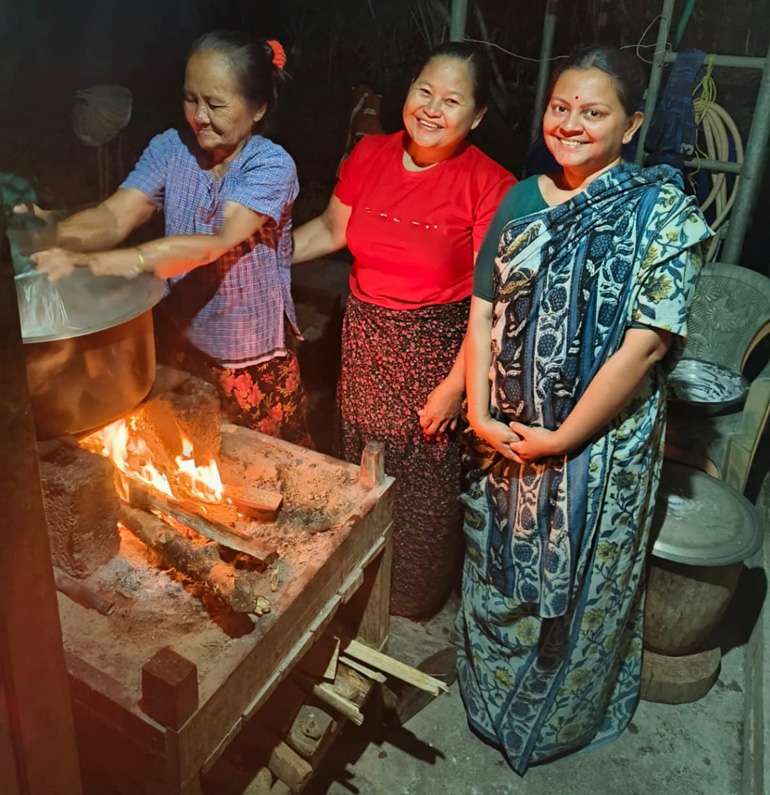
Who would have thought that human migration would lend another dimension altogether to the kitchen! But the more I look, the more I realise that the kitchen has an undeniable role in the vision of anthropology. For whatever reason, Bengali ethnicity, or identity, or nationality, has been, or is being, brought to another taste-geography through migration. Different kinds of flavours of life are gradually being born in them. Its imprint is clear from the food served in weddings to that served in rice-eating ceremonies. The dal makhani of a vegetarian kitchen is cooked with ground cumin, while whole cumin is used for tempering. Through days and nights, the Bengali hamlets try to experience the diverse flavors of the new settled life as much as they can. Rising above political allegiances, this collective voice now seeks development. The goal now is the development of the next generation, and all-round development. One had heard that a group of Bengalis in British India were taken to Punjab to work as sweepers! That Bengali hamlet has merged into the mass of people and can no longer be found. But how are those whom I actually found less in any way! Everything from taro leaves to tender green potol, or pointed gourd, is easily available in the market today. The migration of Bengalis played a bit of a role in the story of demand creating a supply. If you walk around these neighbourhoods in the morning, or after dusk, you will still smell rice cooking. You will smell fish broth simmering in a cumin and chili paste over a wood fire. At first glance, you may not realize the extent of the struggle that goes into the establishment of these markets. It is also a fierce battle to set up a fish market near a gurudwara! These are actually battles of taste. After all, partition changed so much of what we were familiar with. The region of Punjab surrounding Amritsar, was originally made up of agricultural folk, who were vegetarian. After partition, people who arrived from Peshawar, or Rawalpindi, brought non-vegetarian tastes to this side. The melodies of Grand Trunk Road then blended with that. These melodies didn’t just give birth to butter chicken! Dhabas, which bake hot bread by firing a kiln, got established. In pre-partition Punjab, the term “sanjha chulha” meant a single community kiln. Mothers and daughters would make bread together there, much like Bengali women making pithe. This community broke up. After all, can a community always remain when a nation breaks up! That oven then returns in the form of the dhaba, this time in masculine gusto. This too has to be called a kind of food migration.
However, it’s not just the partition! The reasons for the migration of Bengalis are diverse. And in that regard, Mukundaram Chakraborty, the author of Kavikankan Chandi, is right at hand. In some bygone time, due to the oppression of the estate manager Mamud Sharif, he fled his homeland, a village in Burdwan. On the way, his infant son wept for a handful of rice. These were people of Bardhaman, from the soil that yielded golden paddy. Was someone from a village there weeping for want of rice? It is not known whether they actually wept, but from time-to-time people of Bardhaman and Hooghly districts have actually been displaced for various reasons. Across villages, the shadow of the borgis, the marauding Maratha bandits, had by then already left its imprint even on the lullabies sung to put boys to sleep. A group of people were leaving the land. Where were they going? Mukundaram went to the village of Aadra. It seems they crossed through Medinipur and reached Odisha. The name of the village was Koralbonka, which is actually a village in Cuttack district. Those people who, proverbially speaking, left fourteen generations ago, established a community of their own. So, migration also brings about a community! What an amazing feat of survival engineering! That community cooks in the style of Bardhaman and eats fermented rice like the people of Odisha. And long after they were gone, poppy seeds would become very popular in cuisine, with so many conflicts and so much more surrounding poppy. Yet this community from Bardhaman wanted to be in touch with their native soil. They have therefore given refuge to poppy seeds in their larders. If nothing else, eating fermented rice kneaded with poppy seeds allows one to at least feel a connection to the land left behind. But not everyone can do what they want! It isn’t actually possible all the time. After all, Bengalis are not a race but a linguistic community. Their history is a wonderful one. Those who have read Parimal Bhattacharya’s recent novel, Satgaanr Hawatantira (The Windweavers of Satgaon) know that. For those who do not know, let me tell you that in this novel, Parimal Babu has created a captivating historical narrative, immersed in the rich layers of history of Adi Saptagram, the Saraswati River, and Bengal. The story unfolds effortlessly, encompassing everything from daily life and religion to the kitchen. The scope of the narrative stretches from the slave trade to the port of Chittagong. In this context, one is reminded of Narayan Gangopadhyay’s novel, Padasanchar (Footsteps), which talks about the advent of the Portuguese in Bengal. The dialogues of the novel bring to mind the village of Khejuri in Medinipur. It is home to people of Portuguese descent even today. If only I could somehow become part of their culinary tales! The very thought of it fills one with astonishment. The allure of a good story is something powerful. After all, it is the allure of stories that makes me wander from kitchen to kitchen. On this hot summer day, while preparing potoler dolma (stuffed pointed gourd), my thoughts return to the Armenian Church. Does the history that permeates the lanes of Old Dhaka, the tales of Armenian landlords, or the weekly market of Farashganj, keep track of mutton / beef glace (prepared with a brown stock that is simmered over many hours until it becomes thick and syrupy)? Is today’s kitchen fond of history? I don’t have a good answer to this. I have only seen people in Bangladesh preserving the sacrificial meat of Eid-al-Adha by cooking it in fat. It was the Armenians who had once left their mark via this means of preservation. Just as the traces of cooking glace remain, grandmothers, aunties and mothers have also liberated that cuisine by applying it to fish. Perhaps Armenians could never imagine glace being prepared with boal, or catfish! Human migration makes people do so many things that are beyond imagination. At the same time, people want to express the yearning to remain in touch with the land they left behind, and to survive with dignity. They seek not just economic status; in this subcontinent, their ethnic identity becomes extremely important to them from time to time. And various culinary techniques are intertwined with the multitudes of that ethnicity.
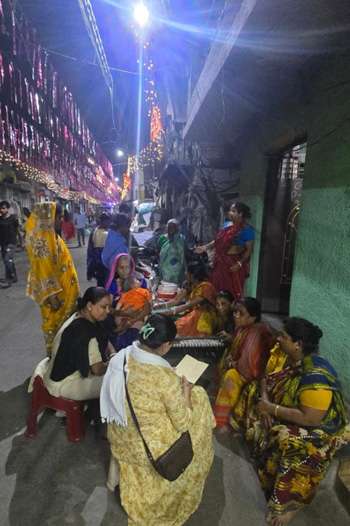
For the past few years, we have been trying to understand this changing landscape of the kitchen through companionship with people. Whether it is Mansa Mashi from Tripura, or Kalyani-di who lives in Subhashgram, the in-depth lessons I receive from them about this evolving culture of cooking enrich me. I simply want to learn all those recipes. Which is why I went to the market in Diglipur and bought “No. 8” rice. I make payesh with the round, plump grains of rice. It is in order to fathom the inner melody of migration that I return to unfamiliar tastes.
The monsoon will arrive in a few days. The clumps of lemongrass will grow dense. I will then cook hilsa fish in Burmese style with lemongrass stalks. When the combined aroma wafts from the steam released by the pressure cooker, it will remind me of the city of Rangoon. But why only Rangoon! In the kitchens of the Burmese colony in Mayabandar (in the Middle Island in the Andamans), or the Webi village of the Karens, I have seen how they cultivate indigenous rice varieties from rice seeds that have been preserved for a hundred years. The memory of eating sticky rice with grated coconut and honey for breakfast early in the morning remains vivid. An aunty in Amritsar taught me a new way to cook hilsa fish, and thus the aroma of Shahzadpur fills my kitchen. Actually, one could say that this constant seeking of human companionship is like the “theory paper.” And when we try to recreate that cuisine in our house in Ballabhpur (Santiniketan), that is like a “practical” in the lab. I’m not sure if a kitchen can be called a lab. But the process of giving shape to the age-old pithe, or rice cake, of Chittagong, using rice sprouts that I cultivate in an earthen pot in my kitchen feels like delving deep into history itself. In that sense, in this kitchen of ours I am connecting with people and exploring people’s kitchens everyday. Whether it is while cooking godok, or preparing a sour curry with tarini fish, I am actually just a student of a travelling school. It would not have been possible without human companionship and a nomadic lifestyle. This is how I seek to connect with the anthropology of food and eating, in the intimate setting of the kitchen. What can match the way the human brain and the taste buds carry history!
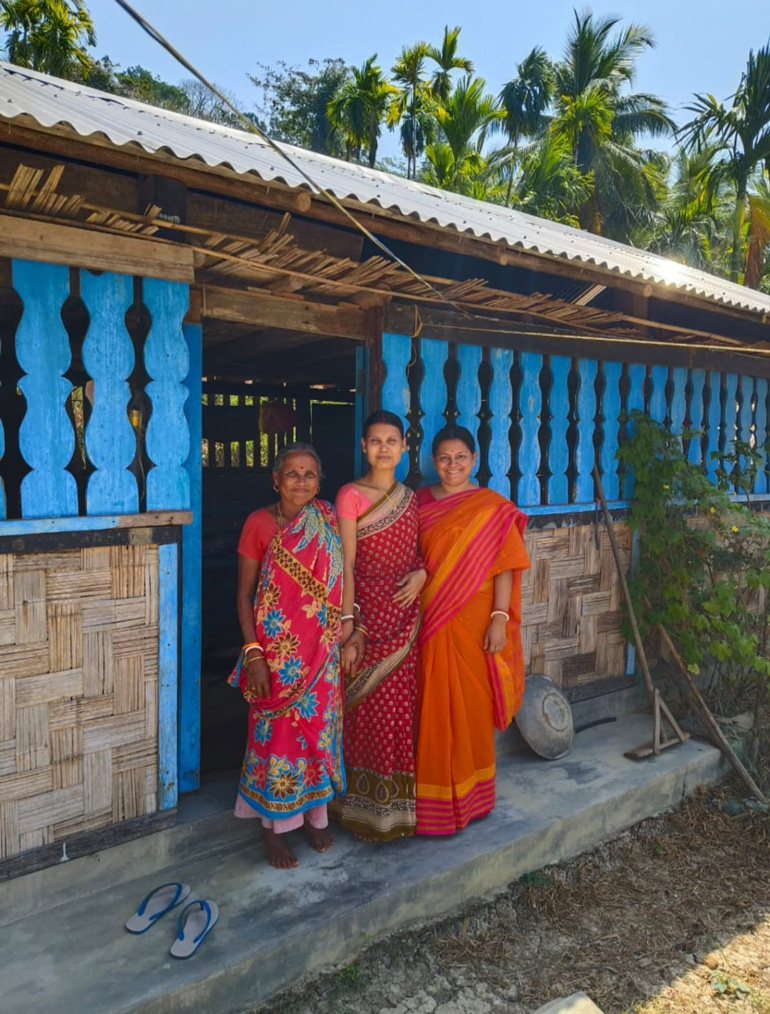
I simply want to feel the timeline, as I pass through Andaman and then Tripura. I gradually realise that this is what our country is, this is what our India is. This nomadic life of humans is a never-ending one. That is the ancient narrative of the earth. It merely leaves its mark in people’s pots and pans. That mark cannot be wiped away. It is not something that can be wiped away. It remains constantly alive in memory. Yet, such a thought is not irrelevant – the world has understood globalisation. People no longer want to accord significance to independence all the time. What if all faces become cast in the same mold! Perhaps on that day, this history of migration will be wiped away from the rice plate. Nonetheless, after all it is a matter of human emotion. People therefore want to leave globalisation behind and immerse themselves in the primal narrative of this triumphant journey of humanity.
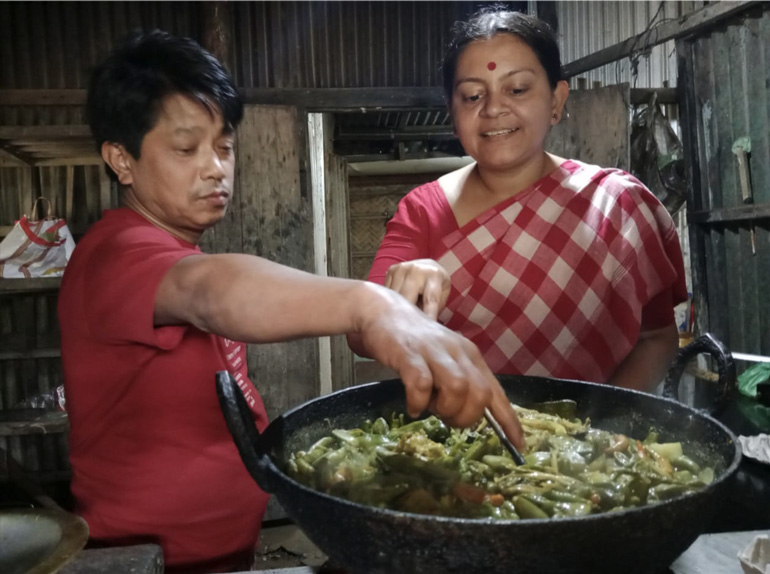
*Photos courtesy the author

It’s a very important document to be read and saved for our references. The translation is very nice and brings out the author’s passion so beautifully. Thank you for such great level of work. Much appreciated
Hunger,the primal urge and cooking,the pristine art of lending dignity and character to eating thereby webbing fascinating history of human aesthetics;such thoughts snowball effortlessly while reading this adventure yarn where cuisines meet and mingle.The mouth waters and the mind enriches simultaneously as the writer engages us exquisitely as her travelling companions to showcase ‘unity in diversity’ through the fascinating migration of food as a tale-telling symbol of human history.